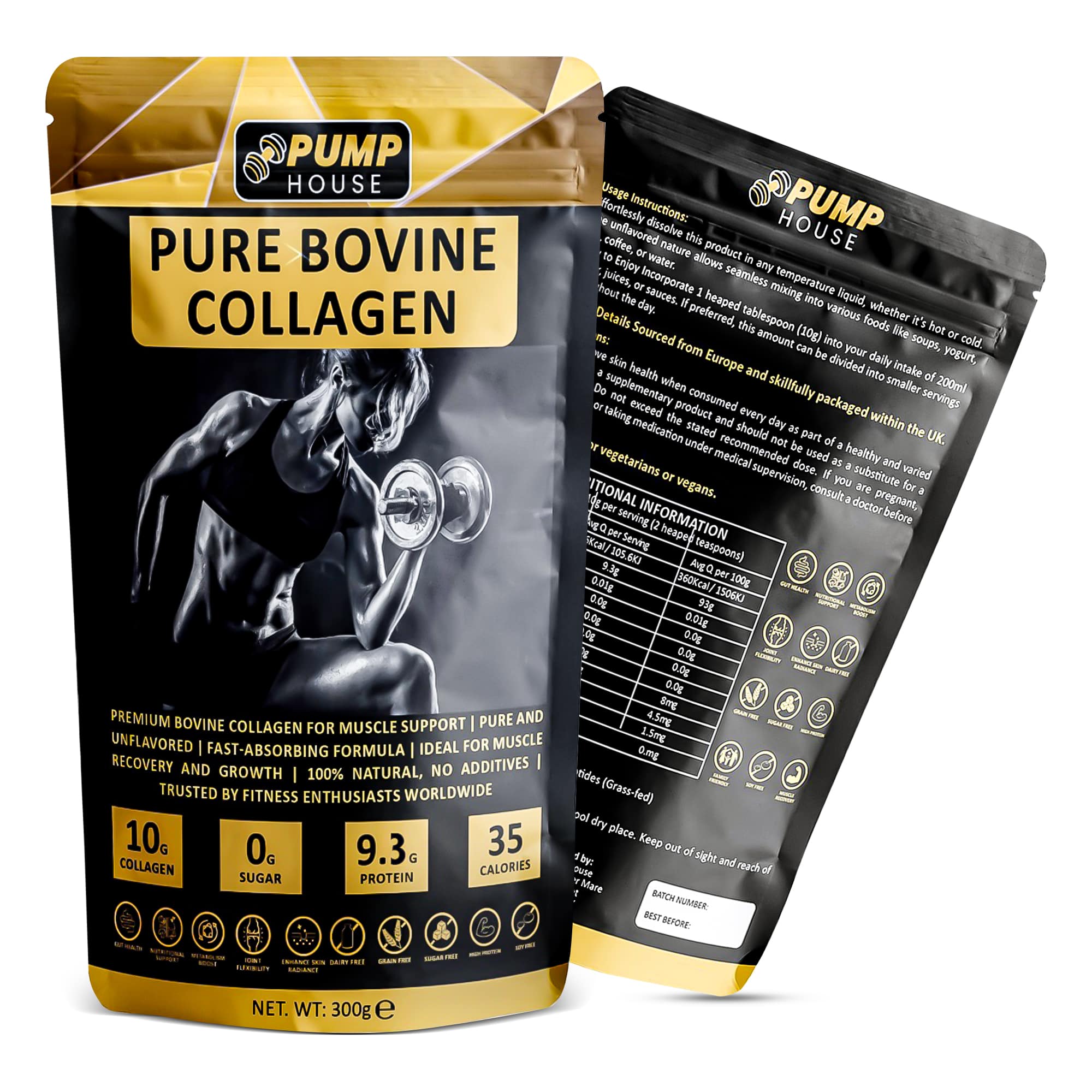


Collagen or Protein Powder: Which Fits You?
You’re standing in the kitchen with two tubs in front of you, both promising better results. One says collagen, the other says protein. If you’ve ever wondered whether collagen or protein powder is the smarter buy, the answer is less about hype and more about your goal right now.
That matters because these two supplements are not interchangeable. They can both earn a place in a routine, but they support the body in different ways. One is typically chosen for muscle recovery, satiety and hitting daily protein targets. The other is often used to support skin, hair, nails, joints and connective tissue. The best choice depends on what you want your nutrition to do for you.
Collagen or protein powder: what’s the real difference?
At first glance, the comparison looks simple. Both come as powders, both can be stirred into shakes, coffee or smoothies, and both are associated with wellness. But nutritionally, they do different jobs.
Protein powder is usually built to help you increase your overall protein intake. It’s commonly made from whey, casein or plant sources, and it tends to contain a full or near-complete amino acid profile. That makes it a practical option when your focus is muscle repair, recovery after training, or simply making sure you get enough protein across the day.
Collagen is a specific type of protein, but it is not the same as a standard protein powder designed for sports nutrition. It is rich in amino acids such as glycine, proline and hydroxyproline, which are closely linked with connective tissue structure. That’s why collagen is often chosen to support skin elasticity, nail strength, hair health and joint comfort.
So when people ask if collagen counts as protein, the technical answer is yes. When they ask if it works the same way as a traditional protein powder, the answer is no.
When protein powder makes more sense
If your main goal is performance, recovery or body composition, protein powder usually comes out ahead.
After training, your muscles need amino acids to repair and adapt. A high-quality protein powder can help you hit that target quickly and conveniently, especially if you’re rushing from the gym to work or trying to avoid skipping proper nutrition after a session. It also helps if you struggle to eat enough protein from whole foods alone.
This matters for more than just lifters. Runners, busy professionals, people in a calorie deficit and anyone trying to stay fuller for longer can benefit from a reliable protein source. Protein supports satiety, which can make it easier to manage appetite, and it plays a central role in maintaining lean muscle mass.
If you’re comparing collagen or protein powder for muscle growth, protein powder is the clearer fit. Collagen does contain protein, but it lacks the amino acid balance typically associated with maximising muscle protein synthesis. That doesn’t make collagen poor quality. It simply means it serves a different purpose.
When collagen earns its place
Collagen tends to appeal to a different kind of goal. If you care about supporting skin, hair, nails, joints or the tissues that keep you moving well, collagen can be a strong addition to your routine.
That is one reason it has moved beyond beauty shelves and into fitness nutrition. Training puts stress on more than muscle. Tendons, ligaments and joints all take a load, particularly if you lift regularly, run often or train at high intensity. Collagen is often used by people who want to support the structures that help them perform consistently and recover well over time.
It also suits people who are less focused on gym metrics and more interested in everyday vitality. Maybe your goal is to feel stronger in your body, support healthy-looking skin or build habits that improve how you look and feel from the inside out. In that case, collagen can make a lot of sense.
The convenience factor helps too. Collagen powders are often easy to mix into coffee, yoghurt, porridge or smoothies without turning the whole thing into a thick shake. For many people, that makes daily use easier to stick to.
Can collagen replace protein powder?
For most active people, not completely.
If you rely on a powder to help hit your daily protein intake for training recovery, collagen is usually not the best one-to-one replacement. It does contribute to your total protein intake, but it is not usually the most effective option for post-workout muscle support.
Think of it this way. Protein powder is often the performance tool. Collagen is often the targeted support tool. One helps you cover broad protein needs. The other helps you focus on connective tissue and appearance-related goals.
That’s why the smartest approach is often not choosing one forever, but choosing based on context. Some people use protein powder after exercise and collagen at another point in the day. Others prioritise one depending on the season they are in - muscle-building phase, fat-loss phase, marathon training block, or simply a period where skin and joint support feels more relevant.
Collagen or protein powder for weight management
This is where the answer depends on what part of weight management you mean.
If your aim is staying fuller, preserving muscle while dieting, and making meals more satisfying, protein powder generally gives you more practical value. It is usually more filling and better suited to supporting lean mass during a calorie deficit.
If your aim is building a wellness routine you can actually keep up with, collagen can still play a role. It won’t do the heavy lifting on satiety in the same way, but it may support consistency because it slots so easily into a morning coffee or smoothie. And consistency is often what keeps momentum going.
There is no magic powder for fat loss. The real win comes from matching the supplement to the behaviour you want to reinforce. If a protein shake stops you reaching for less balanced options mid-afternoon, that’s useful. If adding collagen to your routine helps you stay committed to wider health habits, that has value too.
What to look for before you choose
Don’t just buy based on the front label. Look at what the product is actually designed to do.
With protein powder, check the protein content per serving, how well it fits your digestion, and whether you want whey or a non-dairy option. Texture and taste matter more than people admit. If you don’t enjoy it, you probably won’t use it consistently.
With collagen, look at the source, the serving size and how easy it is to use daily. Some people want an unflavoured option they can add to anything. Others prefer a product that feels more like part of a broader beauty or wellness routine.
It’s also worth being realistic about expectations. Neither supplement replaces a balanced diet, good sleep or regular movement. They work best when they support a routine that is already moving in the right direction.
Do you ever need both?
Yes, sometimes that is the most practical answer.
If you train hard and also want support for skin, hair, nails or joints, using both can be a smart move. A standard protein powder can help cover the muscle recovery side, while collagen can complement it by targeting connective tissue and beauty-from-within goals.
This is especially useful for people whose routines are doing double duty. You might be pushing for better gym performance while also wanting to feel confident in your skin. You might be chasing stronger recovery while trying to support healthy ageing. Those goals are not in competition.
For a lot of active adults, supplementation works best when it reflects real life rather than a single-track fitness plan. Health, appearance, performance and convenience often overlap. A routine that supports all four is easier to maintain than one built around extremes.
So which should you buy first?
If your priority is muscle recovery, daily protein intake or feeling fuller between meals, start with protein powder. It gives you broader support and is usually the more versatile choice for active lifestyles.
If your priority is skin, hair, nails, joints or connective tissue support, start with collagen. It is more targeted, and for many people it feels easier to weave into a daily wellness routine.
If you’re torn because both sound relevant, ask yourself one simple question: what outcome would make the biggest difference to your life over the next eight weeks? Better recovery after training? Easier appetite control? More support for skin and joints? Start there.
Supplements work best when they meet you where you are, not where social media says you should be. Choose the powder that supports your current goal, use it consistently, and let your routine build from there. That’s how small decisions turn into real progress.