Should You Take Creatine on Rest Days?
Yes. Take creatine on rest days. The answer is straightforward, but the reasoning behind it is worth understanding, because most of what you read online skips the mechanism and jumps straight to vague reassurances about "maintenance doses."
Why daily intake matters more than timing
Creatine works by saturating your muscle phosphocreatine stores over time. Your muscles can hold a finite amount, roughly 150–160 mmol per kilogram of dry muscle mass in most people, and getting them to that ceiling requires consistent daily intake over several weeks. Once you are there, keeping them saturated is a slow, ongoing process, because your body breaks down creatine into creatinine at a rate of around 1–2% of total stores per day, which is then lost in urine.
That turnover does not pause because you are not training. So if you skip your rest-day dose, you are simply failing to replace what you lost that day. Do it consistently and your stores will drift down. You will not notice a dramatic fall after a single missed day, but the point of a daily intake is precisely to avoid the cumulative drift.
What the authorised claim actually says
The only authorised claim for creatine in Great Britain is specific: creatine increases physical performance in successive bursts of short-term, high-intensity exercise, and the beneficial effect is obtained with a daily intake of 3g. Note the phrase "daily intake." That is not daily intake on training days. It is simply daily.
The claim concerns performance during exercise, and there is no authorised claim for what creatine does on days you are not training. What the science does support is that muscle creatine saturation is the prerequisite for the performance benefit, and saturation requires consistent dosing. Rest-day intake maintains the condition that allows the claim to hold on training days.
Does the timing within a rest day matter?
No convincing evidence says it does. On training days, there is some research suggesting that taking creatine close to a session may be marginally beneficial, though the effect size is small and the studies are not definitive. On rest days, that question does not even apply. Take it whenever it fits your routine. Consistency across days is the variable that matters, not the hour of the day.
If you find it easier to remember with a meal, take it with a meal. If you already have a view on whether to take creatine with food or on an empty stomach, the same logic applies on rest days as on training days.
What happens if you skip rest-day doses regularly?
Your stores will gradually decline. How quickly depends on your individual turnover rate and how far below saturation you fall. If you train five days a week and skip two rest days, you are taking creatine for five days and coasting for two. Over weeks, that pattern will likely keep you below the saturation level you would reach with seven-day dosing. The performance benefit depends on stores being high, so anything that keeps them lower than they could be is working against the point of taking it.
There is no evidence that intermittent dosing is harmful; it is just less effective at maintaining saturation than consistent daily use.
Do you need a loading phase to reach saturation faster?
Some people do load — taking a higher dose for the first five to seven days to reach saturation more quickly — but it is not required. Whether a loading phase is worth it depends on how quickly you want to see results. Without loading, full saturation typically takes three to four weeks of daily intake at 3–5g. Either way, once you are saturated, the daily dose to stay there is the same: 3g is the intake tied to the authorised claim, and 5g is a common practical dose that many people use.
Which format makes daily dosing easier?
That is partly personal. A powder is easy to weigh or scoop and dissolves well in water. Tablets remove the need for measuring altogether, which some people find simpler on rest days when there is no pre-workout routine to attach it to.
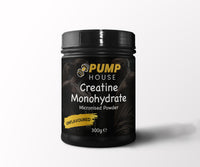
Pump House sells creatine in two formats. The micronised creatine monohydrate powder gives you 60 servings of 5g with nothing added. The creatine tablets are 1,000mg each; three tablets reach the 3g intake tied to the authorised claim. Neither format requires a loading phase, and both are 100% creatine monohydrate with no fillers or sweeteners.
If you are unsure which suits you, comparing powder and tablets covers the practical differences in more detail.
The short answer, again
Rest days are not a reason to skip creatine. Your muscles are still turning over phosphocreatine whether you train or not. Daily intake keeps stores where they need to be so that when you do train, the performance benefit is there. Miss enough rest-day doses and you are gradually undermining the point of taking it at all.