Creatine Powder in Hard Water: Does It Dissolve Properly?
Hard water does not stop creatine monohydrate from dissolving, and it does not degrade the molecule. The white cloudiness some people see when mixing creatine in hard water is a water chemistry artefact, not a sign that something has gone wrong with the product.
How creatine dissolves in water
Creatine monohydrate is a moderately soluble compound. At room temperature (around 20°C), roughly 13–14g will dissolve per litre of pure water. A standard 5g serving sits well within that limit, so the molecule should dissolve fully given enough agitation and time.
The word "monohydrate" refers to the fact that each creatine molecule crystallises with one water molecule attached. When you stir it into a glass of water, that bond breaks and the creatine disperses as free creatine ions in solution. The mineral content of your tap water does not interfere with that process in any meaningful way at the concentrations found in domestic supply.
What hard water actually contains
Hard water is water with a high concentration of dissolved calcium and magnesium ions, typically calcium carbonate and magnesium bicarbonate. In the UK, hardness is measured in milligrams of calcium carbonate per litre. Soft water runs below about 60 mg/l; very hard water (common across much of southern and eastern England) can exceed 300 mg/l.
Those ions are positively charged. Creatine in solution carries a zwitterionic structure — it has both a positive and a negative charge site — but it is electrically neutral overall. The calcium and magnesium ions present in hard water do not form an insoluble salt with creatine, which is why the molecule itself is unaffected.
Where the white cloudiness comes from
This is the question most people are really asking, and the answer is almost certainly nothing to do with the creatine.
When hard water is agitated — poured, shaken or stirred — dissolved carbon dioxide is released and the pH shifts slightly upward. That destabilises calcium and magnesium bicarbonates, which can precipitate as fine white particles, mostly calcium carbonate. This is the same mechanism that causes limescale in kettles and shower heads. The effect is faster if the water is warm.
The result is a faint white haze or light sediment in your glass. It can look disconcertingly similar to undissolved creatine powder, but the two are not the same thing. Undissolved creatine settles as a white gritty layer at the bottom and can be resuspended by stirring. Calcium carbonate precipitate is far finer, stays hazy rather than settling cleanly, and disappears if you use filtered or bottled water instead.
A simple test: mix your serving with filtered or bottled water and compare. If the cloudiness goes, it was the water. If grit remains at the bottom regardless of water source, that is a mixing issue rather than a hard-water problem. Mixing creatine without grit covers that separately.
Does hard water affect how much creatine you absorb?
No evidence suggests it does. Creatine is absorbed in the small intestine via sodium-dependent creatine transporters (SLC6A8). By the time your drink reaches the gut, stomach acid has already overwhelmed any minor pH variation introduced by tap water mineralogy. The calcium and magnesium that precipitate out of hard water are simply not present in quantities that would interfere with creatine uptake.
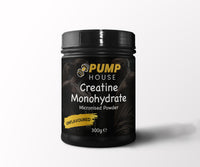
What does matter for absorption is that the creatine is actually in solution when you drink it, not sitting as undissolved crystals at the bottom of the glass. If you are leaving a significant residue, you are getting less than your intended dose. That is a mixing problem, and micronised creatine is specifically milled to a smaller particle size to reduce it. You can read more about how particle size affects mixing in the comparison of micronised vs standard creatine monohydrate.
Temperature matters more than water hardness
Solubility increases with temperature. At 30°C, creatine monohydrate dissolves more readily than at 15°C. If you are mixing with cold water from the tap on a winter morning, you will see more residue than in summer — not because of mineral content but because the water is colder. Using slightly warmer water, or stirring for longer, solves it.
Hot water accelerates dissolution further but also marginally increases the rate at which creatine converts to creatinine over time. For a drink consumed immediately, this is not a practical concern. If you are pre-mixing and storing for hours, use cold water and drink it promptly.
Which format suits you
If mixing is genuinely inconvenient — hard water, no shaker available, mixing at work — creatine tablets sidestep the question entirely. Our Creatine Monohydrate 1000mg Tablets require no mixing at all. If you prefer powder and want to get the most from each serving, our micronised powder is milled fine enough to dissolve quickly with a brisk stir, whatever your water supply. Creatine increases physical performance in successive bursts of short-term, high-intensity exercise; the beneficial effect is obtained with a daily intake of 3g.
Hard water is not a reason to avoid creatine powder. It is, at most, a reason to use a shaker bottle and not to panic about the cloudiness.