Does Creatine Need to Be Cycled? What the Evidence Says
No. There is no good evidence that you need to cycle creatine on and off, and no current guideline from a sports science or nutrition body mandates it. Daily use at 3g is what the research supports, and it is what the authorised claim is based on: creatine increases physical performance in successive bursts of short-term, high-intensity exercise, with a beneficial effect obtained at a daily intake of 3g.
Where the cycling idea came from
The logic was borrowed, not derived. Cycling protocols make sense for anabolic steroids, which suppress endogenous hormone production, and for stimulants, where receptor downregulation is a real and documented concern. Creatine does neither of those things. It is not a hormone, not a stimulant, and does not bind to receptors that downregulate with chronic exposure. The idea that the body needs a break from creatine was carried across from a completely different class of compounds by analogy, not by evidence.
A secondary argument was that long-term use might impair the body's own creatine synthesis. The kidneys and liver produce roughly 1g of creatine per day from glycine, arginine and methionine. Supplementation does appear to modestly reduce endogenous synthesis while intake is high. But this effect reverses when supplementation stops, and there is no evidence it causes lasting suppression or that a cycling break is needed to protect it.
What long-term studies actually show
Creatine monohydrate has been studied more thoroughly than almost any other supplement. Trials extending to several years, including work in older adults, have not identified safety signals that would justify recommending periodic breaks. The safety evidence is covered in more detail here, but the short version is that healthy adults with normal kidney function show no adverse markers from continuous use at recommended doses.
Creatine is retained in muscle as phosphocreatine. Muscle stores saturate — typically within a few weeks of consistent daily use — and excess is excreted. There is no accumulation beyond saturation, so there is no physiological rationale for a washout period in the way there might be for a fat-soluble compound that builds up in tissue.
What happens when you do stop
Muscle creatine levels return to baseline over roughly four to six weeks after stopping. Performance in high-intensity, short-duration efforts tends to return to pre-supplementation levels over the same period. This is not a withdrawal effect; it is simply the level dropping back. If cycling means deliberate off-periods, those off-periods have a real cost: you spend weeks with depleted stores before you are back at saturation.
The 3g daily figure
The authorised beneficial effect is obtained at 3g per day, taken consistently. There is no authorised claim for a loading phase, and neither of the Pump House creatine products requires one. A straightforward guide to daily creatine dose covers the 3g figure and what the evidence says about going higher.
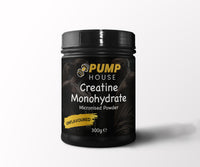
If you prefer powder, the Creatine Monohydrate Micronised Powder gives 60 servings of 5g per tub, unflavoured, with no additives. If tablets are more convenient, the Creatine Monohydrate 1000mg Tablets reach the 3g intake at three tablets daily. Neither format requires cycling.
Is there any situation where a break might make sense?
Practically, yes — if you are travelling, taking time off training, or simply resetting a habit. That is a personal choice, not a physiological requirement. Some people also take creatine only on training days, though the evidence slightly favours daily use to keep stores saturated. Whether to take creatine on rest days is a separate question with its own answer.
If you have a kidney condition or take medication that affects kidney function, speak to your GP before using creatine at all — not because cycling is the answer, but because the baseline question of suitability needs answering first.
The bottom line
Cycling creatine is an idea that travelled from a different context and never acquired the evidence it would need to become a recommendation. The research on continuous daily use is extensive and reassuring. Take 3g a day, keep it consistent, and stop when you have a reason to stop — not on a schedule inherited from steroid culture.