Does Creatine Show Up in a Drug Test?
No. Creatine does not show up as a positive result on a standard drug test. It is not a controlled substance, it is not on the WADA prohibited list, and it is not what workplace or clinical urine screens are designed to detect. That said, there are three separate questions here, and conflating them is where athletes get into trouble.
What standard drug tests actually look for
Workplace drug screening in the UK typically follows a panel that covers substances such as cannabis, cocaine, opiates, amphetamines, benzodiazepines and similar controlled drugs. Creatine is none of those things. It is a compound produced naturally in the body from amino acids, found in meat and fish, and sold legally as a food supplement. No standard workplace panel tests for it.
Clinical urine tests do measure creatinine, which is a metabolic byproduct of creatine breakdown, but that is used as a quality-control marker to check whether a urine sample has been diluted. A high creatinine reading signals a concentrated sample, not supplement use. It does not trigger a positive result.
Is creatine banned in sport?
Creatine is not on the WADA prohibited list and has not been at any point in recent history. The permitted claim under UK food supplement law reflects what the evidence supports: creatine increases physical performance in successive bursts of short-term, high-intensity exercise. The beneficial effect is obtained with a daily intake of 3g of creatine. That is why governing bodies have not moved to ban it.
However, not being banned is not the same as being cleared for competition without any checks. Rules differ between sports and governing bodies, and they can change. If you compete under any anti-doping authority, including UKAD, the responsibility for everything you consume sits with you. Check your governing body's current position and, if in doubt, contact UKAD directly before using any supplement.
The contamination question is different
This is the part that trips up competitive athletes. The question is not whether creatine itself is banned. It is whether the specific product you are taking contains anything that is. Supplement manufacturing carries a contamination risk. A product can be labelled as pure creatine monohydrate and still contain trace amounts of a prohibited substance introduced through shared equipment, poor raw material sourcing or inadequate quality control.
The only way to manage that risk meaningfully is batch-level testing by an accredited laboratory, resulting in a certificate of analysis that covers prohibited substances. Programmes such as Informed Sport and NSF Certified for Sport exist for exactly this reason. Their testing is performed on the actual batch a product is made from, not the formulation in general.
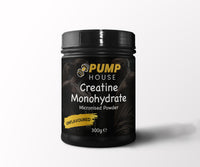
Pump House creatine is manufactured in the UK to GMP standards and contains no additives, sweeteners or fillers. What we do not hold is batch-level anti-doping certification of the kind those programmes provide. We will say that plainly. If you compete at a level where a positive test carries serious consequences, a GMP-made single-ingredient product reduces your risk compared to a complex proprietary blend, but it does not eliminate it. For that level of assurance, you need a product that is batch-certified under a recognised programme.
What actually shows on a test from taking creatine
Taking creatine raises muscle phosphocreatine stores and, over time, increases creatinine excretion slightly because more creatine is being metabolised. Anti-doping tests are aware of this. It is not a flag. The biological passport that WADA operates tracks longitudinal haematological and steroidal markers, none of which are affected by creatine supplementation in a way that mimics doping.
Practical steps for tested athletes
- Check the WADA prohibited list at wada-ama.org. Verify the current version, not a summary from another site.
- Contact your governing body directly. Some sports bodies have guidance that goes beyond the WADA list.
- Use UKAD's Supplement Support platform or speak to a UKAD advisor if you are a UK-licensed athlete.
- If you want batch-level reassurance, look for products carrying Informed Sport or NSF certification on the specific batch you are buying.
- Single-ingredient products with no additives narrow the surface area for contamination, even without certification.
For context on dosing, the standard daily amount is covered separately; no loading phase is required. If you are weighing up formats, powder versus tablets comes down to convenience and daily dose preference rather than any difference in how creatine behaves. The safety record of creatine monohydrate in the research literature is covered separately in what the evidence says about creatine safety.
The short answer remains: creatine will not cause a positive drug test. The longer answer is that tested athletes cannot rely on that alone.