Is Creatine a Steroid? The Difference Explained
No. Creatine is not a steroid. It is not a hormone, not a drug, and not a controlled substance. The confusion is common, but the two things are chemically and biologically unrelated.
What steroids actually are
Steroids are a class of compounds defined by a specific four-ring carbon structure. Some occur naturally in the body — testosterone, oestrogen, cortisol. Anabolic steroids, the type associated with performance enhancement, are synthetic versions of testosterone. They work by binding to hormone receptors and influencing gene expression, which is why they carry serious side effects and are controlled under the Misuse of Drugs Act 1971 in the UK.
Creatine shares none of this. It has a completely different molecular structure. It does not bind to hormone receptors. It does not alter gene expression. It is not scheduled under any controlled substances legislation.
What creatine actually is
Creatine is a compound made from three amino acids — arginine, glycine and methionine. Your liver, kidneys and pancreas synthesise it every day, producing roughly 1 to 2 grams. You also get it from food: a 100g serving of raw beef contains approximately 0.35g, and herring can contain close to 1g per 100g. It is as natural to the body as glycogen or ATP.
Once in the body, creatine is stored primarily in skeletal muscle as phosphocreatine. During very short, intense efforts — a sprint, a heavy lift, a jump — phosphocreatine donates a phosphate group to ADP to regenerate ATP rapidly. That is the mechanism. There is no hormonal cascade, no receptor activation, no alteration of the endocrine system.
Why the confusion exists
The association between creatine and steroids is mostly guilt by association. Both are used by athletes seeking performance gains. Both were discussed heavily in the 1990s when professional sport was under scrutiny for doping. And for people who do not follow the biochemistry, any supplement taken by a muscular person can seem suspicious.
There is also the visual effect. Creatine supplementation does cause the muscle cell to retain water — not subcutaneous fat or fluid that puffs out the face, but intramuscular water that makes the muscle appear fuller. Some people mistake that rapid early change for something hormonal. It is not. It is osmotic: the cell draws in water alongside the creatine.
Creatine is not on the World Anti-Doping Agency prohibited list. It is legal in sport at every level and in every country that follows WADA rules. The International Olympic Committee lifted its previous advisory against it decades ago.
What creatine is permitted to claim
Under GB food supplement law, one claim is authorised for creatine: creatine increases physical performance in successive bursts of short-term, high-intensity exercise. The beneficial effect is obtained with a daily intake of 3g of creatine. That is a specific, narrow claim about a specific type of effort. It is nothing like the broad systemic effects that anabolic steroids produce, and the difference matters.
Claims about muscle growth, endurance, body composition or cognitive function are not authorised for creatine in GB. If you see a brand making those claims for a creatine product, that is a regulatory issue on their part, not evidence that creatine works that way.
Is it safe?
Creatine monohydrate is one of the most studied sports nutrition compounds in existence, with a research record going back more than three decades. For detail on the evidence, see what the research shows on creatine safety. If you have a kidney condition or take medication that affects renal function, speak to your GP before supplementing.
How much do you need?
The authorised 3g daily intake is modest. How much creatine per day covers the evidence on dosing in more detail, including whether body weight changes the picture.
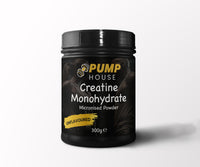
If you have decided creatine is worth trying, format is the only remaining question — powder or tablet. Pump House sells both: a micronised creatine monohydrate powder with 60 servings of 5g per tub, and 1000mg creatine tablets for those who prefer a pre-measured format. Both are unflavoured, single-ingredient, and contain no fillers or sweeteners.