What Does Creatine Powder Taste Like?
Micronised creatine monohydrate has almost no taste. In water at the standard 5g dose, most people notice nothing at all. A faint, very mild bitterness is occasionally reported at higher doses, but it is subtle enough that most people would not identify it as anything specific. There is no sweetness, no saltiness, no chalky aftertaste of the kind you get with some protein powders.
What you actually notice when you mix it
The sensory experience of creatine powder depends on how well it dissolves, not on how it tastes. Poorly milled creatine can feel gritty on the tongue before it dissolves, which some people mistake for a flavour. Micronised creatine — milled to a much finer particle size — disperses quickly and leaves nothing to notice. A 250ml glass of water with 5g of micronised creatine stirred in looks like slightly cloudy water and tastes like water.
Temperature helps. Cold water takes longer to dissolve any powder; warm water speeds things up. Either works. The dissolved result is the same.
Does it change the flavour of other drinks?
No, not meaningfully. Creatine is not bitter enough at 5g to register when mixed into juice, a protein shake, or a sports drink. Some people mix it into black coffee and notice nothing. The practical answer is that unflavoured creatine monohydrate goes into whatever you are already drinking and does not alter it.
This is one reason unflavoured is worth choosing. Flavoured creatine products often use sweeteners, artificial flavourings or bulking agents to mask a bitterness that, at a 5g dose, was not especially pronounced in the first place. If you want to understand what that trade-off looks like more broadly, the piece on why we sell unflavoured supplements covers the reasoning.
Why micronisation matters here
Standard creatine monohydrate dissolves less readily and can leave visible particles sitting at the bottom of the glass. Micronised creatine has a much smaller particle size, which increases surface area and speeds up dispersion. The result is a cleaner mix and a cleaner mouthfeel. There is no difference in the creatine itself — it is the same molecule — just in how it behaves in liquid. The comparison between the two forms is covered in more detail on the micronised vs standard creatine page.
What about the smell?
Almost nothing. A freshly opened tub of micronised creatine monohydrate has a very faint, neutral, slightly powdery smell. It does not smell earthy, fishy or chemical. Most people opening it for the first time comment that there is nothing to comment on.
What the authorised claim covers
Creatine increases physical performance in successive bursts of short-term, high-intensity exercise. The beneficial effect is obtained with a daily intake of 3g of creatine. That is the claim supported by the evidence and permitted under GB regulations. No other performance or health claims are made here.
Powder or tablets?
If you dislike taking powders altogether, creatine monohydrate tablets are an alternative. Three tablets reach the 3g daily intake associated with the authorised benefit. Powder gives you a 5g dose per scoop across 60 servings, which puts you comfortably above the threshold. Which format suits you better is a practical question about routine, not about efficacy — that question is covered properly on the powder vs tablets comparison.
The short version
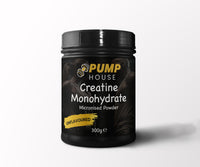
Unflavoured micronised creatine monohydrate is about as close to tasteless as a supplement gets. If you have been putting off trying creatine because you expected something unpleasant, the taste is not the obstacle. Mix it into whatever you normally drink and you will not know it is there. You can see the full product details for our micronised creatine powder on the product page.