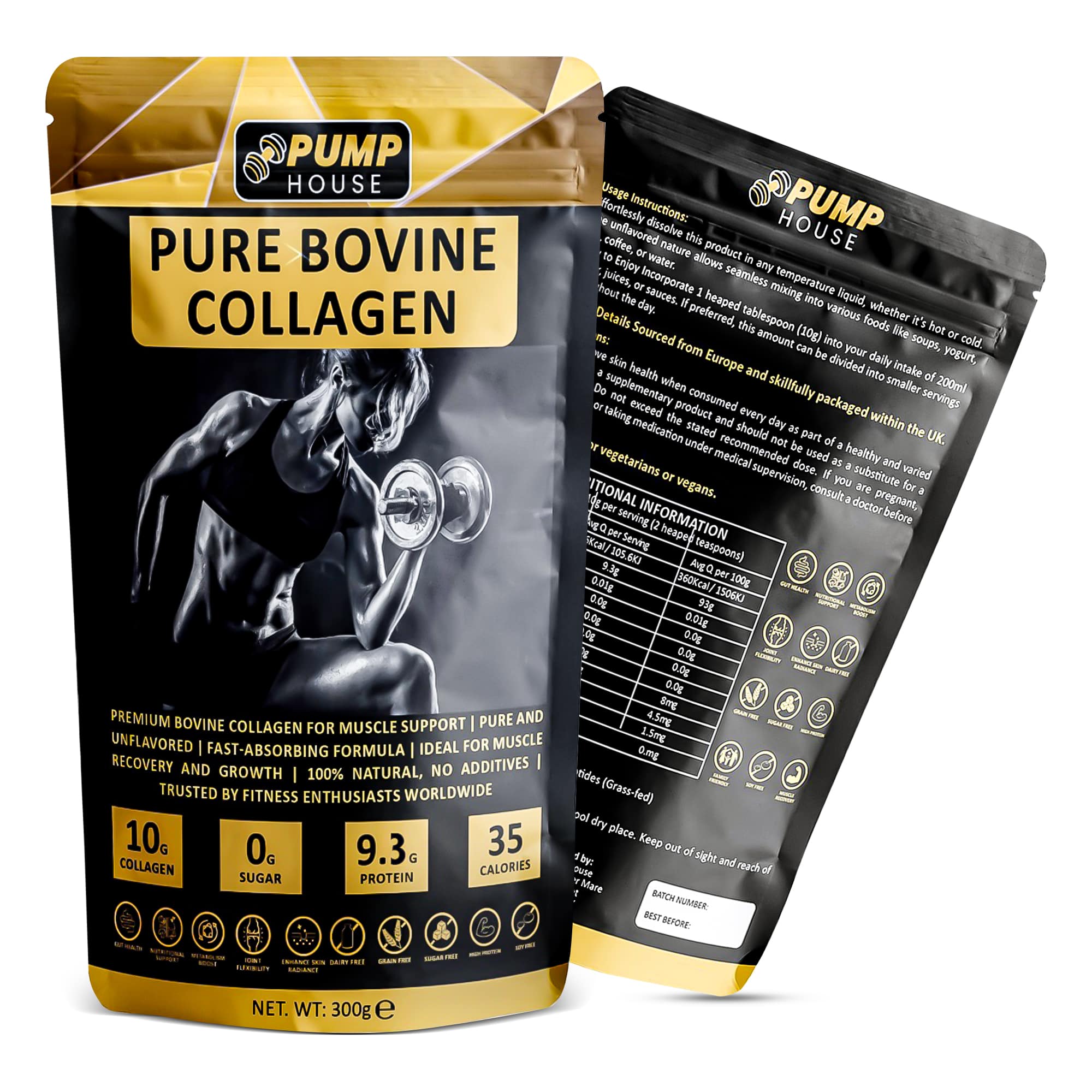


When Should You Take Collagen?
If you’ve got collagen in the cupboard but keep wondering when should you take collagen, here’s the straight answer: the best time is the time you’ll actually take it consistently. Morning coffee, post-gym shake, afternoon smoothie or evening routine can all work. What matters most is building it into your day in a way that feels easy enough to repeat.
That said, timing is not completely irrelevant. Your goals, your routine and the type of product you use can all shape the best moment to take it. If you want support for skin, hair and nails, daily consistency is usually the priority. If you’re more focused on training recovery, joints or staying active without feeling creaky, taking collagen around exercise or alongside a protein-rich routine may make more sense.
When should you take collagen for best results?
Collagen is a protein, made up of amino acids your body uses as building blocks for connective tissue. That includes skin, tendons, ligaments, cartilage and more. Unlike stimulants or pre-workouts, collagen does not usually give you a dramatic “feel it instantly” moment. It works more like a steady habit than a quick fix.
For most people, the best results come from taking it daily for weeks or months rather than stressing over an exact hour. If your routine is already busy, the winning move is to attach collagen to something you never skip, such as breakfast, your first coffee or your post-workout shake.
There is also a practical side to this. Some people find powders easier to remember in the morning because the day is more structured then. Others prefer taking collagen after training because it fits naturally with their supplement stack. Neither approach is automatically better. The right answer is the one that keeps your momentum going.
Morning or night: does timing make a difference?
Morning is popular because it is simple. Stir collagen into coffee, oats or a smoothie and it becomes part of your baseline routine before work, school runs or the gym get in the way. If you like getting your habits done early, this is often the easiest option.
Night can work just as well if evenings are calmer for you. Some people prefer taking supplements after dinner because they are less rushed and more likely to remember. If your morning routine changes from one day to the next, an evening habit may be more reliable.
From a results point of view, there is no strong reason to think morning always beats night or the other way round. Daily use is still the real driver. The difference between 7 am and 8 pm is usually much smaller than the difference between taking collagen regularly and forgetting it half the week.
When should you take collagen if you train regularly?
If you lift weights, run, play sport or train hard a few times a week, collagen timing can be worth thinking about in a more targeted way. That is because collagen is closely linked with connective tissues that take a lot of load during exercise, including tendons and ligaments.
Some active people prefer taking collagen before training, especially when joint support or tendon health is the main goal. Others take it after training as part of their recovery routine, often mixed into a shake. Both approaches can fit well. The bigger picture is that collagen should support your overall protein intake and recovery habits, not replace them.
If your training goal is muscle growth, remember collagen is not a complete protein in the same way whey or other full-spectrum protein sources are. It can still play a valuable role in a broader routine, but it should not be your only protein source if you’re trying to maximise muscle repair and performance.
For active people, a smart approach is to think of collagen as part of the recovery and resilience side of your plan. Protein supports muscle. Collagen supports the structures that help you keep showing up. That matters whether you’re chasing PBs or simply trying to stay pain-free enough to train consistently.
Should you take collagen with food?
You can take collagen with or without food, and for most people either is absolutely fine. If you prefer convenience, mixing it into meals or drinks is often the easiest route. Coffee, yoghurt, porridge and smoothies are common choices because they turn supplementation into something automatic rather than another task on your to-do list.
Some people feel more comfortable taking supplements with food, particularly if they have a sensitive stomach. Others like a lighter option mixed into water. There is no universal rule here.
One thing that often comes up is vitamin C. Your body uses vitamin C in its natural collagen formation processes, so pairing collagen with a vitamin C-containing food or drink can be a sensible move. That might mean berries in a smoothie, citrus fruit at breakfast or a greens blend that fits into the same routine. You do not need to overcomplicate it, but it is a useful detail if you want to be a bit more intentional.
When should you take collagen for skin goals?
If your focus is skin, hair and nails, the best timing is usually the most sustainable timing. Skin support is a long game. You are far more likely to see value from taking collagen every day for a sustained period than from taking it at a supposedly perfect hour but only now and then.
This is where convenience really matters. If collagen goes easily into your morning latte or smoothie, brilliant. If you’re more likely to remember it in the evening with your wind-down routine, that works too.
Skin-focused users sometimes expect quick changes, but collagen is not instant. Think in terms of steady support rather than overnight transformation. Clean daily habits, hydration, balanced nutrition and sleep still matter. Collagen can complement that routine, not do all the heavy lifting on its own.
What if your goal is joints, mobility or healthy ageing?
For joints and mobility, consistency again leads. People who stay active into their thirties, forties, fifties and beyond often start looking at collagen not because they want a beauty boost, but because they want to keep moving well. That could mean lifting without niggles, running with more confidence or simply feeling less stiff day to day.
If that sounds like you, it may help to link collagen to movement. Taking it around training, before a walk or as part of your post-exercise nutrition can make the habit feel more relevant to the goal. The benefit here is often behavioural as much as biological. When a supplement is tied to the activity it supports, you are more likely to stick with it.
Healthy ageing is another area where patience matters. Collagen is not about chasing a miracle result. It is about supporting the foundations that help you train, recover and feel good over time.
How much timing really matters
It is easy to get pulled into tiny details and miss the bigger win. The best collagen routine is the one that slots into real life. If you work long hours, train early and spend half your week on the move, the ideal plan is not the most technical one. It is the one that feels friction-free.
That might mean keeping collagen next to the kettle, in your gym bag or beside your breakfast staples. Remove the effort and you remove the excuses. That is usually where results start.
There are, of course, trade-offs. If you only ever remember collagen after dinner, there is no point forcing a 6 am routine you will abandon by Thursday. If post-workout works well but you train only three times a week, you may need another anchor on rest days so your intake stays consistent. Flexibility beats perfection.
A simple way to decide when should you take collagen
Ask yourself one question: when am I most likely to take this every day?
If you want skin support and love a simple morning ritual, take it at breakfast. If you train hard and already use a recovery shake, take it then. If evenings are your reset point, use that.
The strongest supplement routines are not built on motivation alone. They are built on repetition. That is where products like collagen earn their place - not as a dramatic one-off, but as part of a clean, purposeful routine that supports how you want to look, move and feel.
If you’re ready to make collagen work for you, stop chasing the perfect minute on the clock and choose the moment you can own every day. That is where progress tends to start.